Tag Archive for: Standards

NIHC and A2LA Partner for Hemp Product Safety

The National Industrial Hemp Council of America (NIHC) accepts A2LA ISO/IEC 17025 accreditation for entry into the A2LA-NIHC Verify Joint Hemp/Cannabis Recognition Program as part of their approval process for their NIHC Verify program for hemp testing laboratories. This program allows the hemp testing laboratories that are ISO/IEC 17025 A2LA Accredited and NIHC members to be recognized under
the NIHC Verify program.

The A2LA-NIHC Verify Joint Hemp/Cannabis Recognition Program requires the applicant laboratory to adhere to the requirements applicable in A2LA R101 – General requirements for accreditation of ISO/IEC 17025 laboratories and A2LA normative documents R103, R105, and P102.

The goal of A2LA-NIHC Verify Joint Hemp/Cannabis Recognition Program is to promote testing transparency, standards requirements, consumer confidence, and ultimately product safety.

This program was developed to establish a benchmark for hemp testing laboratories that are accredited to conduct the following testing (at a minimum):

  • Pesticides
  • Heavy Metals
  • Potency
  • Microbiology
  • Residual Solvents

This program is covered by the A2LA chemical and biological fields of testing.

Program Requirements
ISO/IEC 17025 General requirements for the competence of testing and calibration laboratories
Specific Requirements – A2LA-NIHC Verify Joint/Hemp Cannabis Recognition Program

Please contact A2LA for more information on this accreditation at: agouker@A2LA.org

##

About NIHC 

The National Industrial Hemp Council of America provides high-quality networking and resources for its members, from farm to consumer. Its leadership is composed of leading international, federal, state, private industry, and government professionals throughout the sector. The organization is dedicated to furthering market development, assisting members in entering the industry, and educating consumers on industrial hemp and its applications. For more information, please go to www.nihcoa.com.

WASHINGTON, D.C. – The Safety Equipment Institute, an affiliate of ASTM International, and the National Industrial Hemp Council of America (NIHC) announced today they have signed a memorandum of understanding (MOU) to develop a joint certification program for hemp testing laboratories. This initiative will lead to industry harmonization and embed confidence of hemp brands promoting consumer health and safety.

“We’re excited for this program that we believe will strengthen consumer confidence and be a value add for hemp producers. Partnering with SEI and ASTM International, who have a rich history in certification and standardization, should make for an excellent partnership.” said Patrick Atagi, President and CEO of the National Industrial Hemp Council of America.

“ASTM international is the world leader in developing cannabis standards and we are proud to partner with NIHC to administer this program to fill a marketplace need,” says Tricia Hock, Director of Certification Operations with the Safety Equipment Institute. “This effort coincides with the work of ASTM International’s cannabis committee (D37) which includes over 1000 members from 32 different countries. We believe delivering a joint certification program for hemp testing laboratories is a critical first step in harmonizing the hemp industry.”

The certification program, known as ASTM International’s CANNQ/HEMPQ Certification Program, is the first independent certification of its kind in the hemp and cannabis industry.  The testing laboratory certification program is part of a broader collaborative initiative among the Safety Equipment Institute and the National Industrial Hemp Council of America.

ASTM International is a not-for-profit nongovernmental organization that develops voluntary consensus standards and defers to appropriate government authorities to determine the legal and regulatory framework regarding the control and use of cannabis.

To learn more about ASTM International’s efforts in the cannabis space, visit www.astmcannabis.org.

About NIHC

The National Industrial Hemp Council of America provides high-quality networking and resources for its members, from farm to consumer. Its leadership is composed of leading international, federal, state, private industry, and government professionals throughout the sector. The organization is dedicated to furthering market development, assisting members in entering the industry, and educating consumers on industrial hemp and its applications. For more information, please go to www.nihcoa.com.

About ASTM International

Committed to serving global societal needs, ASTM International positively impacts public health and safety, consumer confidence, and overall quality of life. We integrate consensus standards – developed with our international membership of volunteer technical experts – and innovative services to improve lives… Helping our world work better.

WASHINGTON, D.C. – The National Industrial Hemp Council of America (NIHC) and the Hemp and Cannabis Costa Rica Council (HCANN-CR) announced today that they have signed a memorandum of understanding (MOU) to cooperate on issues including improving the quality of hemp research, marketing, networking, and consumer protection services to strengthen and advance the brand of hemp in the global marketplace.

“As NIHC continues to increase our global footprint, partnering with HCANN-CR presents a tremendous opportunity to promote American hemp in the Western Hemisphere,” said Patrick Atagi, President and CEO of the National Industrial Hemp Council of America. “Working directly with our colleagues in Costa Rica will be a value add for American hemp producers with additional research opportunities and brand promotion to promote the hemp economy in both countries.”

“This alliance enhances the historical commercial partnership between the United States of America and Costa Rica,” said Roy Thompson, Chairman of HCANN-CR. “The global hemp industry can help create thousands of jobs in Costa Rica, generating economic and social benefits for our population and the access to better and safer products for the consumers around the world. We recognize the American hemp industry as a global leader in technology, standards, and the importance of the environment as a priority.  We are united by history, commerce, and values. We celebrate this agreement with great excitement.”

HCANN-CR and NIHC intend to strengthen the relationships between the organizations to improve the quality of hemp research, marketing, networking, and consumer protection services to advance the brand of hemp domestically and internationally. Together, they hope to identify and seek funding opportunities through numerous private, non-profit, and governmental organizations to increase the quality of industrial hemp research guiding public policy in both countries.

NIHC already participates with the United States Department of Agriculture (USDA) in the Market Access Program (MAP) and has written a unified export strategy for the markets of Europe and Asia. While the agreement announced today between the two parties is not part of a cooperative agreement with the MAP program, NIHC can nonetheless rely on experiences in working with foreign governments overseas and utilize best practices in the international marketplace to develop more networking opportunities and open further markets in Costa Rica for hemp producers in the United States.

The Costa Rican government recently approved the cultivation, processing, storage and transportation of cannabis production including industrial hemp. The new Costa Rican law does not allow for the recreational use of higher-THC cannabis.

About the National Industrial Hemp Council of America: The National Industrial Hemp Council of America provides high-quality networking and resources for its members, from farm to consumer. Its leadership is composed of leading international, federal, state, private industry, and government professionals throughout the sector. The organization is dedicated to furthering market development, assisting members in entering the industry, and educating consumers on industrial hemp and its applications. For more information, please go to www.nihcoa.com.

About the Hemp and Cannabis Costa Rica Council: The Hemp and Cannabis Costa Rica Council (HCANN-CR) was established by a team of global industry leaders in cannabis and global policy. HCANN-CR members represent a variety of sectors within the hemp and medical marijuana industry including growers and farmers, suppliers and equipment, processing and extraction, laboratory testing, professional services, manufacturers, wholesale and retail, medical professionals, and consumers. For more information, please go to www.hcann-cr.com.

NIHC Hears from Hemp Champions on Capitol Hill

The National Industrial Hemp Council’s 2021 Hemp Business Summit day two started off with Courtney Moran, the President of the Oregon Industrial Hemp Farmers Association (OIHFA) who introduced one of our featured speakers, Congressman Kurt Schrader. Attendees heard an update from Congressman Schrader on everything that was happening in Congress, but he drilled down on his legislation, the Hemp and Hemp-Derived CBD Consumer Protection and Market Stabilization Act (H.R. 841) that will allow CBD and other hemp-derived products to be lawfully used in dietary supplements. NIHC has met with and expressed our support to Congressman Schrader several times and he thanked NIHC for its support of his legislation.

Later in the morning, NIHC was pleased to hear an update from Senate Finance Committee Chairman Ron Wyden (D-OR) who has two bills in the Senate that would address the logjam at the Food and Drug Administration (FDA). His bipartisan bill, the Hemp Access, and Consumer Safety Act with Senator Jeff Merkley (D-OR) and Rand Paul (R-KY) would go a step further than Congressman Schrader’s bill by including CBD as an ingredient in both dietary supplements and food. Attendees heard Senator Wyden explain that the FDA has the authority to exempt items from this prohibition but has yet to exempt hemp-derived CBD despite the 2018 Farm Bill which removed hemp from the list of controlled substances.

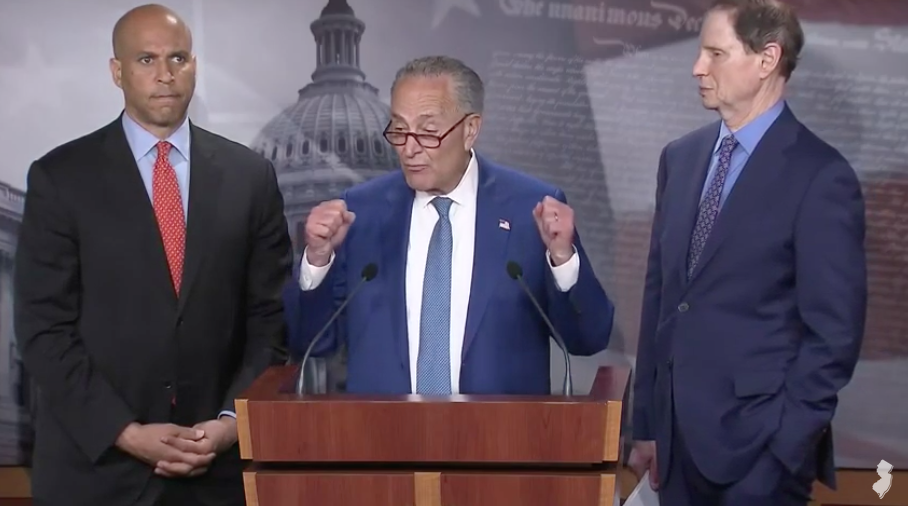
Senator Wyden also spoke about the Cannabis Administration and Opportunity Act that he introduced alongside Senate Majority Leader Chuck Schumer (D-NY) and Senator Corey Book (D-NJ) that would provide a pathway for the use of CBD in dietary supplements while addressing the numerous social inequality issues around cannabis and cannabis use.

“Congress says hemp and hemp-derived CBD are not illegal substances, but the FDA somehow just keeps on merrily treating it that way,” Wyden said.

FDA Addresses NIHC

Senator Wyden’s comments were the perfect segue as attendees heard next directly from Grail Sipes, who is the Acting Chair of FDA’s Cannabis Products Committee. This wasn’t the first time the FDA has addressed an NIHC meeting. You may recall the FDA has some of its senior leaders address the 2019 NIHC meeting in Portland, Oregon. But now, we’re in a different time with a new party in control of Washington.

“We continue to underscore the need for evidence to support the science, safety profile and quality of CBD and cannabis-derived products,” Sipes said.

While many in our industry may agree to disagree, the one thing that we can all agree on is that as an industry, we must have regulatory certainty to continuing growing our industry.

Sipes also made news by announcing at the NIHC Hemp Business Summit that FDA was conducting a two-phase CBD market survey on the accuracy of CBD products to evaluate if they really contain what the label indicates. A large party of the NIHC mission is to be partners in enhancing consumer safety, and we feel the same way. There is too much misinformation and inaccurate claims being made by bad actors in our industry and there continues to be independent third-party groups testing CBD products finding errors in labeling. That’s why NIHC announced at our meeting the launch of an effort to ensure accuracy in labeling. We look to partner with industry stakeholders and eventually to have an NIHC certified logo on products being sold in stores and online.

In our announcement, we wrote:

NIHC believes in establishing an accurate, consistent testing regime. This label will bring value to the marketplace and integrity to products sold nationwide in stores and online. NIHC is exploring testing standards and third-party verification laboratory requirements that will be applicable when testing for potency, pesticides, metals, terpenes, and other product attributes. A critical part of the program will include using third-party accreditation bodies to verify that laboratories are following the appropriate testing protocols and properly calibrating their equipment, and that those running the tests are properly trained. 

USDA Also Addresses NIHC

The NIHC attendees also heard from a panel on USDA regulations which featured Bill Richmond, Chief of USDA’s hemp program. He was joined on stage by former Agriculture Marketing Service Deputy Administrator and current Food Safety Net Service executive and NIHC Board member Barry Carpenter. Rounding out the panel was Santa Fe Farms Vice President of Advocacy Hunter Buffington.

There is no shortage of items for USDA to address on behalf of the hemp industry and our panel moderator Rick Fox, NIHC’s Government Affairs Committee Co-Chair, moderated a panel that could have addressed even more issues, but unfortunately only had an hour to get through the many important issues in the USDA’s final rule on domestic hemp production. During his remarks, Richmond announced the new Hemp Enterprise Monitoring Program (HEMP) at USDA that will be an effort by USDA to capture production data and a way to monitor licensee information.

Carpenter for his part drew a parallel between the hemp industry and the organic program when that program was in its infancy at USDA. Carpenter noted that when the USDA adopted its organic program, that it was done to provide the maximum amount of flexibility to the industry as possible as they sought to grow and expand market access – particularly internationally – for organic products.

Importance of Communicating About Hemp

Hemp Business Summit attendees also heard from Global Branding Expert of GT&I Glenn Tarr who talked about the need to speak with a unified voice to promote U.S.-based hemp in the global economy. As Founder and Creative Director of GT&I, Glenn spoke to attendees about the importance of raising awareness of NIHC as a global leader in the hemp industry and that means getting away from the use of the cannabis leaf that is all too often associated with higher THC cannabis. In doing so, Tarr told attendees NIHC can help lead the effort by communicating all the positive attributes of the hemp plant including its numerous industrial applications and ability to sequester carbon; and change the narrative that hemp is just another word for an intoxicating substance.

Economic Update – And Plenty of Data to Share

NIHC Chief Economist Beau Whitney of Whitney Economics closed out the Summit with an engaging economic update.

Whitney noted that cannabis production is now legal in 65 countries and that U.S. government inaction is hurting U.S. global competitiveness. Despite that inaction, U.S. hemp still accounts for 25 percent of the world’s hemp market.

Whitney says there has been an increase of 575% of cultivation capacity in the U.S. but that the lack of buyers, particularly in the manufacturing sector, has led to an excess of inventories and with it, a sharp decline in prices. He indicates the shifting trend in the hemp industry with cultivation licensees increasing in non-tradition hemp producing states. While traditional hemp states like Kentucky and Colorado still have a place among the states with the most licensees, we’re seeing additional licenses rising in states like Wisconsin, Michigan, Illinois, and Tennessee rounding out the top ten.

Finally, Whitney closed by noting that capacity is still required in the hemp industry, but not just for CBD flower. He expects that the trend will begin to shift to fiber and grain product in 2022. He also noted that there is no data available for hemp product manufacturing. 

The NIHC 2021 Hemp Business Summit provided the needed intelligence and framework to continue to move the needle on U.S. hemp production and innovation in the coming year. NIHC looks forward to continuing the discussions on many levels to secure the future of the industry.

WASHINGTON, D.C. – The National Industrial Hemp Council (NIHC) announced today, at its 2021 Hemp Business Summit, plans to roll out a pilot program establishing standards for product testing protocols and laboratories. Participants in the program will be able to label products with the NIHC label of approval, ensuring the accuracy of product labeling that will set standards for ingredients, ensure the accuracy of labeling and ultimately, strengthen consumer confidence in the cannabidiol (CBD) products that they’re buying. 

The announcement, made during the standards panel discussion, comes one day before NIHC will hear directly from the U.S. Food and Drug Administration (FDA) Cannabis Product Committee Chair, Grail Sipes, at its meeting tomorrow. 

“We’re excited for this program that we believe is going to strengthen consumer confidence, promote accuracy in labeling and ultimately, protect the brand of hemp,” said Patrick Atagi, President and CEO of the National Industrial Hemp Council. “Since the passage of the 2018 Farm Bill, consumers have been waiting for the FDA to act on CBD. Without any guidance from the FDA thus far, NIHC is stepping up to develop our own testing standards and labeling protocols that we believe will enhance consumer safety and protect the consumer’s right to know.”

NIHC believes in establishing an accurate, consistent testing regime. This label will bring value to the marketplace and integrity to products sold nationwide in stores and online. NIHC is exploring testing standards and third-party verification laboratory requirements that will be applicable when testing for potency, pesticides, metals, terpenes, and other product attributes. A critical part of the program will include using third-party accreditation bodies to verify that laboratories are following the appropriate testing protocols and properly calibrating their equipment, and that those running the tests are properly trained. 

“As one of North America’s leading food and consumer product testing companies, FSNS is pleased to lead this effort,” said Barry Carpenter, NIHC Board member, NIHC Standards Committee Chair, and Senior Advisor for Regulatory Affairs and Client Relations for Food Safety Net Services (FSNS). “This initiative will bring value to the marketplace and peace of mind to the consumer with reliable and transparent information about CBD products.”

NIHC is looking to partner and explore these standards with the world’s leading standards bodies, hoping to make a pilot program for CBD companies and labs available for enrollment. 

With NIHC developing its own standards and label, consumers looking to buy CBD products, at either brick-and-mortar retail stores or online, will have an opportunity to look for an NIHC label that ensures products that they’re considering purchasing meet the most stringent safety protocols in the hemp industry.

About the National Industrial Hemp Council: The National Industrial Hemp Council provides high-quality networking and resources for its members, from farm to consumer. Its leadership is composed of leading international, federal, state, private industry, and government professionals throughout the sector. The organization is dedicated to furthering market development, assisting members in entering the industry, and educating consumers on industrial hemp and its applications.

NIHC: “The safety profile of Delta-8 THC products is questionable”


WASHINGTON – Last week, the National Industrial Hemp Council (NIHC) met with over 20 state regulators at the National Association of State Departments of Agriculture (NASDA) conference on what is working and not working in their state hemp programs. We repeatedly heard their deep concerns about the impact of delta-8 tetrahydrocannabinol (Delta-8 THC) on public health, and the need to revise the Federal definition of hemp.

In light of those meetings, and after statements of similar concerns recently made by the Food and Drug Administration (FDA) and the Centers for Disease Control (CDC), NIHC issues its position on Delta-8 THC:

“NIHC continues to believe that consumer safety is paramount for all products in the hemp market.  The safety profile of Delta-8 THC products is questionable, and we believe that they should not be sold or marketed as hemp-derived products.

“The clearest pathway to protect consumer safety and create a hemp economy that works for everyone is to revise the federal definition of hemp to include all tetrahydrocannabinols, as recommended by NASDA with the bipartisan support of 45 states, and as broadly supported by stakeholders throughout the industry, regulatory officials, and in both chambers and parties on Capitol Hill.  Such a clarification in statute would unequivocally prevent the sale of products containing unsafe concentrations of Delta-8 THC as hemp.

“Delta-8 THC has flooded the market because of the lack of regulatory certainty from the FDA on cannabidiol and other hemp-derived products. Along with Congress changing the statutory definition of hemp to one percent total THC, the FDA can do its part to protect consumer safety by making clear guidelines for hemp-derived products as Congress intended in the 2018 Farm Bill.”

The NIHC Government Affairs committee continues to have conversations and look at more intricate policy solutions on Delta-8 THC. The committee will release more details in the coming weeks. In the meantime, the mid-November Hemp Business Summit in Washington, D.C. offers opportunities for NIHC members, industry stakeholders, and regulators to actively engage with each other in person on how to regulate Delta-8 THC.

About the National Industrial Hemp Council: The National Industrial Hemp Council provides high-quality networking and resources for its members, from farm to consumer. Its leadership is composed of leading international, federal, state, private industry, and government professionals throughout the sector. The organization is dedicated to furthering market development, assisting members in entering the industry, and educating consumers on industrial hemp and its applications. For more information please go to www.hempindustrial.com.

Louisville, KY – The National Industrial Hemp Council (NIHC) this week has been convening a series of discussions with state regulators alongside the annual meeting of the National Association of State Departments of Agriculture (NASDA).

The purpose of the meetings has been to obtain feedback from state regulators on the individual hemp programs they administer in order to find out what’s working and what’s not with regard to the 2014 Farm Bill hemp pilot program authorities and the 2018 Farm Bill authorities as implemented by the USDA Final Rule on hemp production. U.S. Senate Agriculture Committee staff requested such input as their work gets underway to develop the next Farm Bill towards anticipated enactment in 2023.

“The one phrase we’ve been hearing throughout the week has been ‘regulatory inconsistency’,” said Government Affairs Co-Chairs Herrick Fox, CEO and Founder of Meristem Farms (VT) and Graham Owens, President of Delta Agriculture (TX) who have been leading these conversations at NASDA. “States are frustrated by continuing inaction by FDA and the costs, logistics and technical challenges of implementing hemp programs under the USDA Rule. We’re hearing valuable feedback that we believe will help Congress write and pass a farm bill that will create a hemp economy that works for everyone.”

Thus far, NIHC staff and the Government Affairs Committee has met with regulators from Wisconsin, Alaska, Virginia, Florida, West Virginia, Pennsylvania, New Mexico, Colorado and Kentucky. There are more meetings scheduled to be taking place throughout the week.

At its Hemp Business Summit in Washington, D.C. in November, NIHC will offer more opportunities, bringing members, industry stakeholders and regulators together to engage with each other to continue these discussions.

For more information about NIHC’s participation at NASDA, including interview requests, please contact Larry Farnsworth at lfarnsworth@hempindustrial.com.

About the National Industrial Hemp Council: The National Industrial Hemp Council provides high-quality networking and resources for its members, from farm to consumer. Its leadership is composed of leading international, federal, state, private industry, and government professionals throughout the sector. The organization is dedicated to furthering market development, assisting members in entering the industry, and educating consumers on industrial hemp and its applications. For more information please go to www.hempindustrial.com.

 # # #

NIHC continues our work to serve as a credible resource to government officials in developing sound, common-sense regulations of America’s hemp economy. As part of those efforts, we have continued to engage the U.S. Senate Committee on Agriculture on a range of issues that have the potential to be included in 2023 farm bill development and negotiations anticipated to begin as early as this fall.
Relating to this, and to language in FY22 Appropriations bill extending 2014 Farm Bill authorities for another year through 2022, NIHC has been asked by Senate Ag committee staff to solicit feedback and comments from state regulators. This will help them compile the comments on what is and isn’t working in their state hemp plans under the 2014 pilot authority and the 2018 authority, as implemented by the USDA Final Rule.

On September 18, NIHC staff and members of our Government Affairs committee will be attending the annual meeting of the National Association of State Departments of Agriculture (NASDA) in Louisville, Kentucky. At NASDA’s meeting, NIHC will have a breakout room available to us to meet with individual states to hear their concerns and discuss proposed solutions. After NASDA’s annual meeting, NIHC will compile comments from state regulators and deliver them to Senate Ag committee staff.

This is a value-add to the hemp industry as a whole and NIHC is proud to lead these efforts and be your voice to the Senate Ag Committee, NASDA and the states that we believe will deliver workable solutions that will create a hemp economy that works for everyone.

If you plan to be at the NASDA meeting and would like to meet with NIHC to discuss how hemp is being regulated in your state, please contact Grace Johnson at gjohnson@hempindustrial.com so we can deliver your feedback to Washington and make sure your voice is heard on Capitol Hill.

This week, NIHC submitted comments to Senate Majority Leader Chuck Schumer (D-NY), Senators Corey Booker (D-NJ) and Ron Wyden (D-OR) and the Senate Finance Committee on the 2021 draft of the Cannabis Administration and Opportunity Act (CAOA).

As part of their efforts to put together substantive and meaningful legislation, the sponsoring offices put out the draft to solicit feedback from the stakeholder community. As we’ve previously seen with the hemp industry, the policy making process can be nuanced and difficult. While this step to gather feedback wasn’t necessary on the part of the bill’s authors, we value their approach and both believe and hope that it will help make for a more comprehensive piece of legislation to be officially introduced.

This draft legislation, designed to overhaul the nation’s cannabis laws, has many provisions that address industrial hemp. NIHC provided feedback through our government affairs committee. Our feedback included the following suggestions to the sponsoring offices:

  1. Rather than vesting authority for licensing cannabis cultivation in the Treasury Department, NIHC encourages the Sponsoring Offices to consider vesting this authority in the Department of Agriculture, while reserving the involvement of Treasury, Justice and FDA for taxation and public health and safety when cannabis products enter the marketplace, as is routine with tobacco, wine grapes, etc.
  2. The bill should revise the Federal definition of hemp by specifying the threshold in terms that are complementary to what it provides for cannabis, with a threshold of one percent total concentration of tetrahydrocannabinols rather than the current parameter of 0.3 percent for only delta-9 THC.
  3. The provisions relating to cannabidiol (CBD) should reflect the approach taken in Senator Wyden’s own S. 1698, by allowing all hemp-derived products, including CBD, as both food and supplement. The draft legislation proposes to allow only CBD, with no provision for other hemp-derived products that are not intoxicating or otherwise subject to abuse, and would allow CBD only as supplements, and not as food.
  4. The tax structure proposed in the bill is too onerous and severely disadvantages small and minority-owned businesses, which will promote rather than reduce illicit production.

Though NIHC identifies several specific issues requiring careful further attention, and do not doubt that our colleagues in the high-THC cannabis industry do so as well, we believe this draft covers most, if not all, pertinent issues that Federal regulation of cannabis will have to address. As you know, our organization does not engage in high-THC cannabis, but we believe that our industry’s experience in the Federal regulation of hemp to date is replete with lessons learned that will be of great value as Congress and stakeholders chart a course for the future of cannabis regulation in our country.

As for next steps, the sponsoring offices will now review the feedback they’ve no doubt received from numerous stakeholders, and the timetable for official introduction of legislation remains in their hands. Until then, NIHC will continue to engage with Capitol Hill to advocate for our positions that we believe will be most beneficial to our members and the hemp industry.

To read our press release and full comments on the Cannabis Administration and Opportunity Act, please click here.

Watch the announcement of the legislation here.

By Patrick Atagi, NIHC Board Chair


Last week, I wrote to you about the value-add that trade associations bring to your business, particularly the opportunities they bring with regards to networking with like-minded professionals in the industry. In case you missed my piece from last week, I shared that one of my favorite moments as NIHC Board Chair was at our inaugural 2019 meeting in Portland when the reception was humming with chatter and people were signing NDAs with each other in the hotel lobby. It was at that moment that I knew we were going to be a top-notch organization that brought people together for the betterment of the whole industry.

You will read in the article from Kevin Latner (see his blog post) about that value-add from the international market development standpoint and how engaged NIHC has been in that process.

We’ve also been extremely involved in setting standards and leading the way for consumer safety. Therefore, this week I want to talk to you about our efforts to promote industry standards and best practices.

There is a lot of information available, especially in the hemp world. The questions we face are: What should you pay attention to in the industry? How can a technical issue in a state or Congress radically restructure the industry as we know it? How do you know which industry options have value?

Associations are, in many ways, uniquely positioned to separate the valuable and meaningful information of wheat from the chaff of rumors, buzzwords, and maelstrom of press releases.

Your time is valuable, and we know it. The NIHC is driven to compile and discern industry data, and we work to provide our members fact-based information in as close to real time as it gets.

We are putting our time and energy to lead the way to establish a framework to effectively and continuously conduct research, that will ultimately result in achieving certifications and accreditations for the industry. All this work will ultimately benefit the consumers of hemp-derived products, and drive the industry forward.

  1. Conduct Research: In the effort of collecting solid industry data, NIHC leaders, key members, and industry partners are together dedicated to conducting research and explaining trends, as well as benchmarking existing practices. We must all be open, honest and transparent if our industry is going to continue to grow. We won’t take shortcuts – our data is as verifiable and accurate as is possible.
  1. Develop Certifications and Accreditations: Many associations develop and issue certifications or other credentials that reflect an understanding of the industry and the accepted strategies, processes, and practices to meet their organization’s business needs. The NIHC is no different, and is working towards standardizing product testing for potency, lab accreditation, and manufacturing processes that meet recognized and accepted international (ISO) standards.

To this end, the NIHC and its leadership is guided by the principles of its charter, further market development, assistance to members entering the industry, and education of the consumer on industrial hemp and its applications.

There are many confusing and contradicting claims and assertions. Farmers, manufacturers, retailers, financial institutions, suppliers, members of the supply chain, and consumers have the right to fact-based information. Solid research and partnerships can provide the much-needed education and clarity to consumers in a marketplace with so many choices. We all know that what is needed is a system where hemp can move through the stream of commerce with integrity. NIHC’s priority is to develop certifications and standards that will bring peace of mind to consumers, resulting in a thriving industry.

You’ll hear plenty more about our efforts in the coming weeks and we look forward to showcasing a lot of what we’ve done for our members and the industry at our Annual 2021 NIHC Hemp Business Summit, November 14-16, 2021.

We hope you’ll consider attending and look forward to seeing old faces and making new friends.

For more information on membership, please visit the NIHC website.

Tag Archive for: Standards

Nothing Found

Sorry, no posts matched your criteria

National Industrial Hemp Council of America
Privacy Overview

This website uses cookies so that we can provide you with the best user experience possible. Cookie information is stored in your browser and performs functions such as recognising you when you return to our website and helping our team to understand which sections of the website you find most interesting and useful.